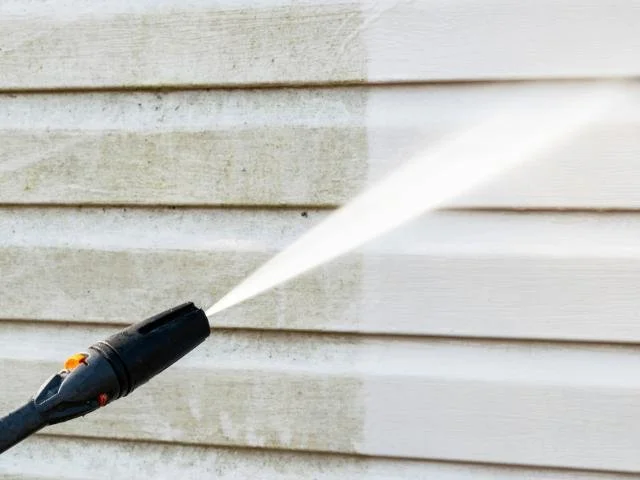
A Power Washing Problem
Chelsea O'Donnell
This time of year, you can spot it all over town. The first warm weekend hits, someone drags out a power washer, and suddenly every surface around the house is getting blasted.
On the surface, it feels productive. The house looks cleaner and the grime disappears. You stand back and think, great, my spring cleaning is done. The problem is, power washing is one of the easiest ways to accidentally damage your home if you don’t know what you’re doing.
I see it every spring. The biggest misconception is that more pressure equals a better clean. But it really means you’re forcing water into places it shouldn’t go or stripping away materials that are supposed to protect your home.
Take siding, for example. Vinyl siding is designed to shed water, not withstand high-pressure spray at close range. Aim a pressure washer upward or get too close, and you can drive water behind the panels. That moisture gets trapped and over time it can lead to mold, mildew, and even rot in the structure underneath.
Wood is even less forgiving. We’ve seen plenty of decks and trim that looked fine before a weekend cleaning and came out rough, splintered, and permanently damaged. Once you tear up the surface fibers of wood, you can’t undo it. You’re sanding, repairing, or replacing it entirely.
Then there are windows. High-pressure water can break seals, force moisture into frames, and shorten the lifespan of the window itself. Again, it might not show up immediately, but it’s the kind of damage that creeps in over time.
And don’t forget about paint. A pressure washer in the wrong hands can strip paint right off siding and trim. Sometimes people think they’re “prepping” a surface and end up creating a much bigger project than they planned for.
So what’s the right way to do it?
First, understand that most homes don’t need high pressure at all. What they need is the right cleaning solution and a controlled rinse. A soft wash with low pressure, combined with a cleaner that breaks down dirt, algae, and mildew is usually far more effective and a lot safer. One of my favorite products is Wet It and Forget it which doesn’t require any pressure washing at all and is great at removing common outdoor stains and grime.
Second, distance matters. Standing too close is where most of the damage happens. If you’re using a pressure washer, keep your distance and let the water do the work gradually instead of trying to blast everything off in one pass.
Third, know what you’re cleaning. Concrete can handle pressure. Your siding, trim, windows, and deck? Not in the same way. Treating everything the same is where people get into trouble.
Lastly, timing matters. Early spring is a great time to clean up your home’s exterior but it’s also when materials are still coming off a long winter. They’re not always in their strongest condition, which makes aggressive cleaning even riskier.
The goal here isn’t to scare you off from cleaning your house. It’s to do it in a way that actually helps instead of quietly creating problems you won’t notice until later. If you’re going to power wash this spring, ease up on the trigger. Your house will thank you for it.
Bob O’Donnell is the owner of O’Donnell Bros. Inc., a Bristol-based home improvement company established in 1975. Email your questions for Bob to info@odonnellbros.com with the subject line “Ask the Pro.” All questions may be considered for publication. To contact Bob for your remodeling needs, call O’Donnell Bros. Inc. at (860) 589-5155 or visit http://www.odonnellbros.com. Advice is for guidance only.