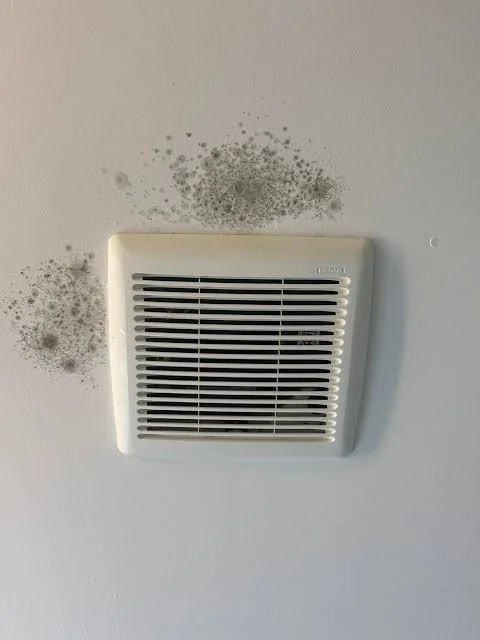
Painting Over Mold? Here’s Why It Always Comes Back
Chelsea O'Donnell
Mold stains inside a house are a common homeowner headache, and many people think a fresh coat of paint will fix them. Many people don’t realize that while they might temporarily fix the problem with a bucket and brush, mold won't disappear with a quick fix.
Why Paint Can’t Cover Mold
Mold is in fact a living organism, not a stain. It feeds on drywall paper, wood, dust, and just about anything else organic, and it thrives where things stay damp. Paint over it, and you’ve sealed it under a layer of latex in a warm, dark spot with plenty of moisture. That’s ideal growing conditions.
Even paints labeled “mold-resistant” can’t kill what’s already there. They’re meant to make it harder for new spores to settle in, but a problem that’s already established isn't going to go away by covering it. Once mold has started to grow, it keeps eating and spreading until it breaks through the surface again. If you’ve painted over mold before and it keeps returning, that’s the reason why.
More Than a Cosmetic Problem
Mold is more than an eyesore. Long-term exposure can aggravate allergies, trigger asthma, and irritate the lungs, especially for children, older adults, and anyone with a weakened immune system. Even when the air in your home seems fine, hidden mold can quietly erode air quality. If it creeps into insulation, behind drywall, or under flooring, the repair bill grows right along with it.
The Right Way to Fix It
Before any paint comes out, you need to deal with both the mold and the moisture feeding it. Here’s the order that works:
Track down the moisture. Look for a roof leak, a plumbing problem, poor ventilation, or condensation. Fix the source first, or the mold will keep coming back. Lackluster bathroom fans are a common culprit.
Kill the mold. For areas under 10 square feet, you can usually tackle it yourself. Wear gloves, a mask, and goggles, and choose a cleaner made to kill mold rather than relying on bleach alone. Bleach can lighten the stain and make mold look gone when it isn’t.
Remove what’s damaged. If mold has worked its way into drywall, insulation, or wood, that material has to go. Scrubbing won’t reach spores rooted in porous surfaces.
Dry everything thoroughly. Run fans and a dehumidifier. Any leftover dampness invites mold to start over.
Prime and repaint. Once the area is clean, dry, and solid, apply a quality primer made for problem areas, then paint. Products designed for bathrooms and other damp spaces help guard against a repeat.
Prevent Instead of Patch
After the hard work is done, prevention keeps it done. Improve ventilation, keep indoor humidity below 50%, and fix leaks as soon as you spot them. Think long-term, too: good insulation, vapor barriers, and regular roof and gutter maintenance all help keep moisture and mold outside where they belong.
It’s Your Health and Home
Painting over mold is the home-improvement version of spraying air freshener into a garbage can. It covers up the problem without solving it. The only real fix is to stop it at the source.
So before you pick up that roller, find out what’s causing the moisture and deal with the mold the right way. It’ll save you time, money, and possibly your lungs.
Bob O’Donnell is the owner of O’Donnell Bros. Inc., a Bristol-based home improvement company established in 1975. Email your questions to info@odonnellbros.com with the subject line “Ask the Pro.” All questions may be considered for publication. To contact Bob for your remodeling needs, call O’Donnell Bros. Inc. at (860) 589-5155 or visit http://www.odonnellbros.com. Advice is for guidance only.